





Manor Farmhouse listed building prosecution
A significant and unusual listed building prosecution case has successfully concluded in which Huntingdonshire District Council brought contempt of court proceedings.
This the first case of which the IHBC is aware where this specific course of action has been needed. It is an illuminating example for those uncommon circumstances where injunctions are necessary but have been flouted.
The case concerned Manor Farmhouse, 15 High Street, Spaldwick, a Grade II listed building dating in part to 1546 and located between two Grade II* listed buildings. The owner purchased the property in September 2014, and within two weeks had removed external render and lath-and-plaster ceilings. Although requested to stop work by the council, he declined to do so and a temporary injunction was obtained to prevent any further damage.
The injunction fell away on 15 October 2014 when the owner gave an undertaking in the county court not to carry out any further work to the building without first obtaining listed building consent or the prior approval of the local authority. Despite this undertaking and further council warnings, works continued without consent.
On 11 November the owner appeared at Peterborough County Court and admitted 20 individual breaches of the undertaking previously given to the court in 2014, including the removal of wattle-and-daub panels, the removal of windows, internal walls and internal fixtures, and the insertion of new second-floor accommodation.
The owner was found guilty, given a six-week suspended sentence and ordered to pay £25,000 towards the council’s costs. The owner will also have to meet the costs of appropriate reinstatements and risks further action by the council if this is not done.
A listed building enforcement notice will now be sought to secure the reinstatement of the fabric of the building. It would be open to the council to initiate further proceedings if the notices are not complied with.
This article originally appeared in IHBC's Context 148, March 2017. It was written by Bob Kindred, IHBC research consultant, who maintains the National Database of Listed Building Prosecutions.
--Institute of Historic Building Conservation
Find out more
Related articles on Designing Buildings Wiki
- Appeals against urgent works notices.
- Building Preservation Notice.
- Cautions or formal warnings in relation to potential listed building offences in England and Wales.
- Certificate of immunity.
- Charging for Listed Building Consent pre-application advice.
- Compulsory purchase orders for listed buildings.
- Conservation area.
- Conservation officer.
- IHBC articles.
- Listed building.
- Forced entry to listed buildings.
- Listed Building Heritage Partnership Agreements.
- Local Listed Building Consent Orders.
- Listed Building Consent Order.
- Planning authority duty to provide specialist conservation advice.
- The Institute of Historic Building Conservation.
- Use of direct action in heritage enforcement cases in England.
IHBC NewsBlog
IHBC sponsors Gardens Trust event 23-4 Sept 2026
.jpeg)
'Learning from the Past, Shaping the Future’ takes place in Milton Keynes
Renovations to Frank Lloyd Wright's Fallingwater complete
.jpg)
World Heritage Preserved project opens house for tours again
Shakespeare Birthplace Trust places Hall's Croft on HAR Register
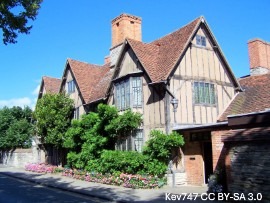
Stratford-upon-Avon home of Shakespeare's daughter is 'At Risk'
Lady Grange’s House repaired on St Kilda
.jpg)
National Trust for Scotland repairs stone cleit with link to famous island resident
Griff Rhys Jones on BBC Radio 4 Today programme
,_Green_Lane,_Derby.jpg)
The Victorian Society’s President unveiled its latest Top Ten Endangered Buildings 2026.
Need a MATE? Book your place now.

IHBC offers free webinars on applying for IHBC accreditation (Full & Associate).
UK Stained Glass Repository finds windows new homes

How are stained glass windows are rescued, stored and repurposed?
APPGEBE report sets high aims for quality
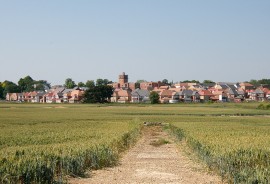
'Government must not sacrifice quality in drive to build 1.5m homes'
New measures protect Historic Shipwrecks from heritage crime

Underwater cultural heritage benefits from new HE guidance
How could the City of London skyline look in 6 years' time?

Visualisation shows approved planning applications as completed buildings
National Trust for Scotland calls for VAT cuts

Heritage neglect is encouraged by current policies
IHBC's 'Context' Issue 186 features Industrial Heritage

IHBC's members' journal reports on the challenges of conserving infrastructure
Book now for IHBC Annual School 2026

IHBC Annual School is taking place 18-20 June 2026 in Newcastle
RICHeS Research Infrastructure offers ‘Full Access Fund Call’

RICHeS offers a ‘Help’ webinar on 11 March
Latest IHBC Issue of Context features Roofing
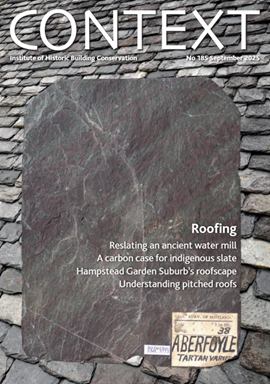
Articles range from slate to pitched roofs, and carbon impact to solar generation to roofscapes
Three reasons not to demolish Edinburgh’s Argyle House

Should 'Edinburgh's ugliest building' be saved?
IHBC’s 2025 Parliamentary Briefing...from Crafts in Crisis to Rubbish Retrofit
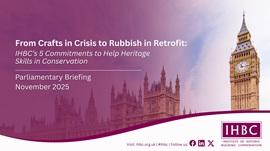
IHBC launches research-led ‘5 Commitments to Help Heritage Skills in Conservation’
How RDSAP 10.2 impacts EPC assessments in traditional buildings

Energy performance certificates (EPCs) tell us how energy efficient our buildings are, but the way these certificates are generated has changed.